Nose LINE ON
Nose LINE ON
Non-surgical nose shaping for a nose that’s already good but could be a little more defined. We build support with LSCO absorbable threads and add only as much filler as needed.
LINE ONNose LINE ON
If your nose is too good for surgery, but you’d like it a little more defined
We build the nose’s framework with LSCO and add only as much filler as needed.

- Procedure time
- 5–10 min
- Anesthesia
- Local or IV sedation
- Back to daily activities
- Same day
- How long it lasts
- 6–12 months (varies)
Do any of these sound familiar?
If any of these apply to you, please mention it first at your consultation.
LINE ONNose LINE ON
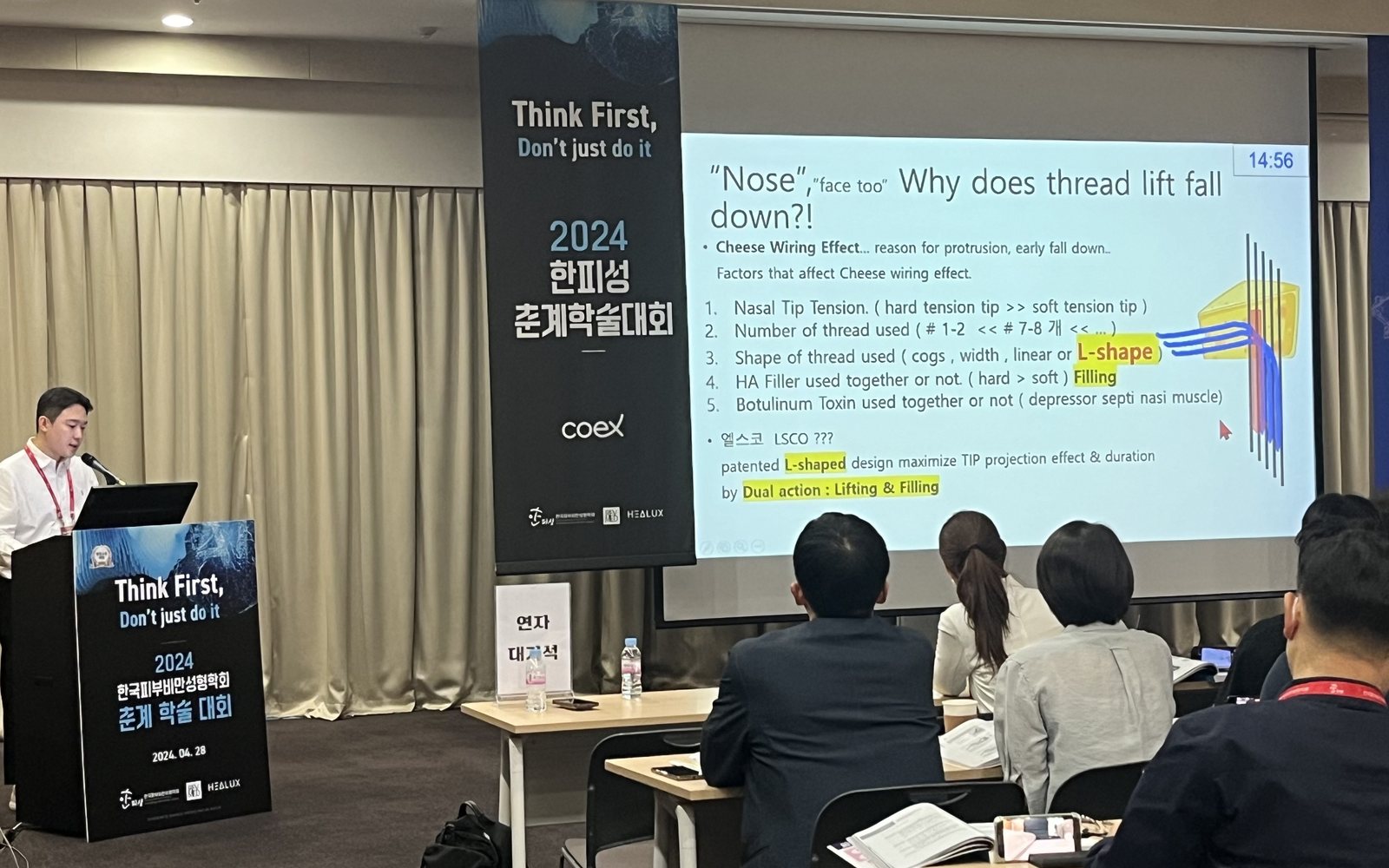
Point 1. Threads and filler
Threads lift the tip, and filler refines the shape
Threads behave more like a solid, so they’re better for firmly lifting the nasal tip. Filler is a gel that flows, so it’s better for refining the shape in detail.
LINE ONNose LINE ON
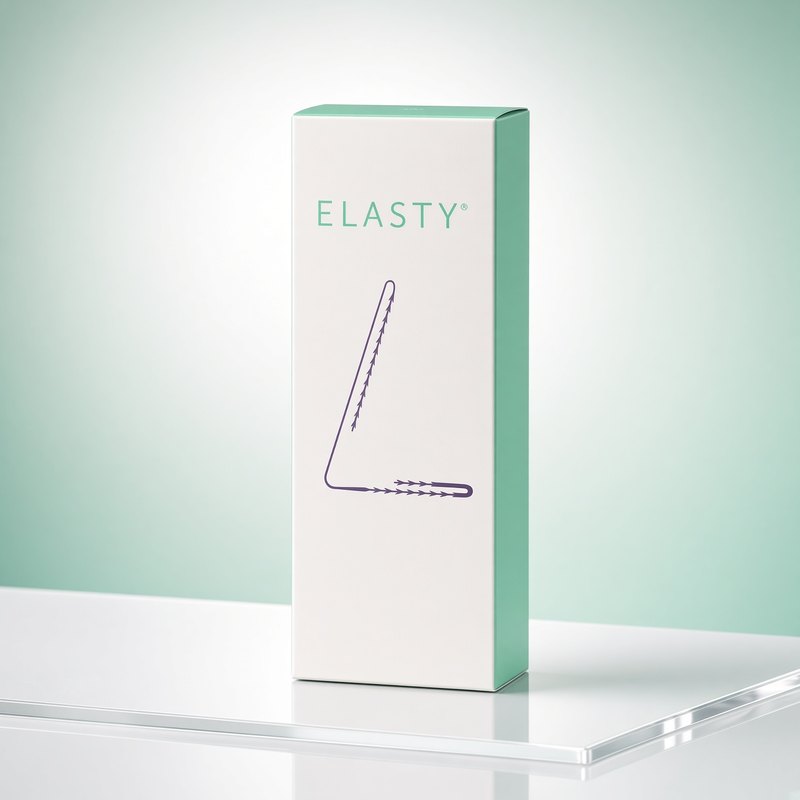
Point 2. The L-shaped thread
It fills and supports the nasal tip
LSCO is a thread designed so that its folded L-shaped end fills the nasal tip directly.
Medical note
Nose LINE ON in detail
From here, we explain how the surgery works, recovery and what to watch for in more detail. It’s written to the standards Dr. Oh uses when he sees patients.
A note from Dr. Oh
Just as a building needs both steel and concrete, I use threads to build the structure and filler to refine the shape.Dr. Oh Hae Seok, Medical Director
This may suit you if…
Your nose is already fine and surgery feels like too much, or you’re worried about surgery, the recovery time, the cost or the side effects.
In photos, you wish your bridge were a little higher or your tip a little more defined, and you’d like a subtle refinement rather than a big change.
This may not suit you if…
If your nose needs to be made smaller, or the shape you want is very different from your current shape, we recommend surgery instead.
We also don’t recommend it if you’ve had nose surgery before, or if the skin of your nose is very thick or tight and doesn’t stretch easily.
Procedure, time & anesthesia
We examine your nose and stretch the skin to see how far it gives, then talk through the shape you’d like and what’s realistic. The treatment takes 5–10 minutes. You can choose between local anesthesia and IV sedation.
We use at least 4 and up to 6 LSCO threads. Two are placed to the depth of the third marker on the cannula to lift the lower cartilage of the nose. Two more fill and support the nasal tip directly with their folded L-shaped ends. Filler is added only if needed, and only a small amount (no more than 0.5 mL). Depending on the shape of your nose, we adjust the marker depth to either increase the angle between the nose and upper lip (the nasolabial angle) or fill only the tip.
Pain, recovery & returning to daily activities
Right after treatment, your nose is a little more swollen from the anesthetic and the immediate effect, and it looks its fullest. A small protective dressing (DuoDERM) stays on the tip for 3–4 days.
Early on, before the threads settle, they can shift. Please avoid expressions that move the nose, such as scrunching it, for 1–2 weeks. You can return to daily activities the same day. Please avoid alcohol for about a week.
Results, how long they last & repeat treatment
If the look right after treatment is 100%, it settles to about 80% over 2–4 weeks and about 60% over 3–6 months. This result usually lasts 6–12 months, and longer for some people.
We recommend waiting at least 6 months before repeating the treatment. If you’d like a small correction before then, a touch-up is possible (charged separately).
A common misconception
A common misconception is that nose threads never dissolve. Threads dissolve more slowly in the nose than in many other parts of the face, and when a nose is opened during surgery, thread is sometimes still there. If you like the shape the remaining thread gives, that means the result lasts longer. If you want it completely gone, it may need to be surgically located and removed.
You may hear both that nose threads last more than a year and that they last less than a month. That’s because older nose threads worked differently on the bridge and the tip. On the bridge, the thread fills space and makes the bridge look higher, so the effect lasts. On the tip, older threads lifted the cartilage to hold it up, which usually didn’t last long.
LSCO is designed so that its folded L-shaped end fills the nasal tip. This means the tip, too, can hold its shape longer. It is an absorbable PDO (polydioxanone) thread. Because it is a solid, not a gel like filler, it doesn’t spread, and it breaks down gradually over time.
Anesthesia & fees
- Fees
- Discussed after an examination
Results and recovery vary from person to person. Whether a treatment suits you is decided after Dr. Oh examines you in person.
Nose LINE ON: questions answered by Dr. Oh
노즈 라인온 효과는 얼마나 유지되나요?
보통 6~12개월 정도 가고, 더 오래 유지되는 분도 있습니다. 시술 직후가 가장 높아 보이고, 몇 달에 걸쳐 조금씩 자리를 잡습니다.
How much can you change a nose without surgery?
A change of up to 20% from your nose’s current shape is well within what non-surgical treatment can do. If you want a bigger change than that, I recommend surgery.
How does the L-shaped nose thread avoid poking through the skin, and why does it last longer?
Because I designed it so that the nasal tip rests on a broad surface, where the thread folds into an L, rather than on the sharp end of a thread.
Is LSCO a thread or a filler?
LSCO is a thread: an L-shaped lifting suture made for shaping the nose. Nose LINE ON uses LSCO together with filler to refine the shape of the nose without surgery.
Can I get Nose LINE ON if I’m thinking about nose surgery later?
If you’re already considering surgery, I recommend having surgery from the start.
Will nose threads cause problems if I want nose surgery later?
Compared with a nose that has never been treated, surgery involves one extra step, so it can be slightly more work for the surgeon. But it won’t stop you from having surgery or make the result worse.
관련 칼럼
코필러는 퍼지나요? 코실은 튀어나오나요?
둘 다 맞는 말입니다. 다만 조건이 있습니다. 필러는 필요 이상으로 많이 쓰면 퍼지고, 끝이 뾰족한 일자형 코실은 돌출될 수 있습니다. 그래서 코의 기본 골격은 L자 실로 잡고, 모양은 최소량의 필러로 다듬습니다.
코실은 녹나요? 나중에 코수술을 해도 될까요?
코실을 했다고 나중에 코수술을 못 하는 것은 아닙니다. 다만 수술 생각이 어느 정도 있다면, 시술을 거치지 않고 바로 수술하는 편을 권합니다.
실과 필러를 왜 같이 쓰나요? 철근과 시멘트를 생각하면 쉽습니다
실은 고체에 가깝고 필러는 흐르는 성질이 있습니다. 코끝을 세울 때는 실이 낫고, 섬세한 모양을 잡을 때는 필러가 낫습니다. 건물을 지을 때 철근과 시멘트를 함께 쓰는 것과 같습니다.
코필러가 혈관을 막는 일은 얼마나 드물고, 어떻게 피할까
필러가 혈관을 막아 시야에 문제가 생기는 일은 드뭅니다. 하지만 2015~2018년에 보고된 사례 48건 가운데 56%가 코에서 생겼습니다. 생기면 확실한 치료법이 없어서, 넣는 방법과 양으로 미리 피하는 것이 전부입니다.
We are a 30-second walk from Gangnam Station Exit 3, and the medical director examines every patient in person.